
ComfortDelGro serves over 1,500 riders in Punggol autonomous vehicle trial; system faring well on roads
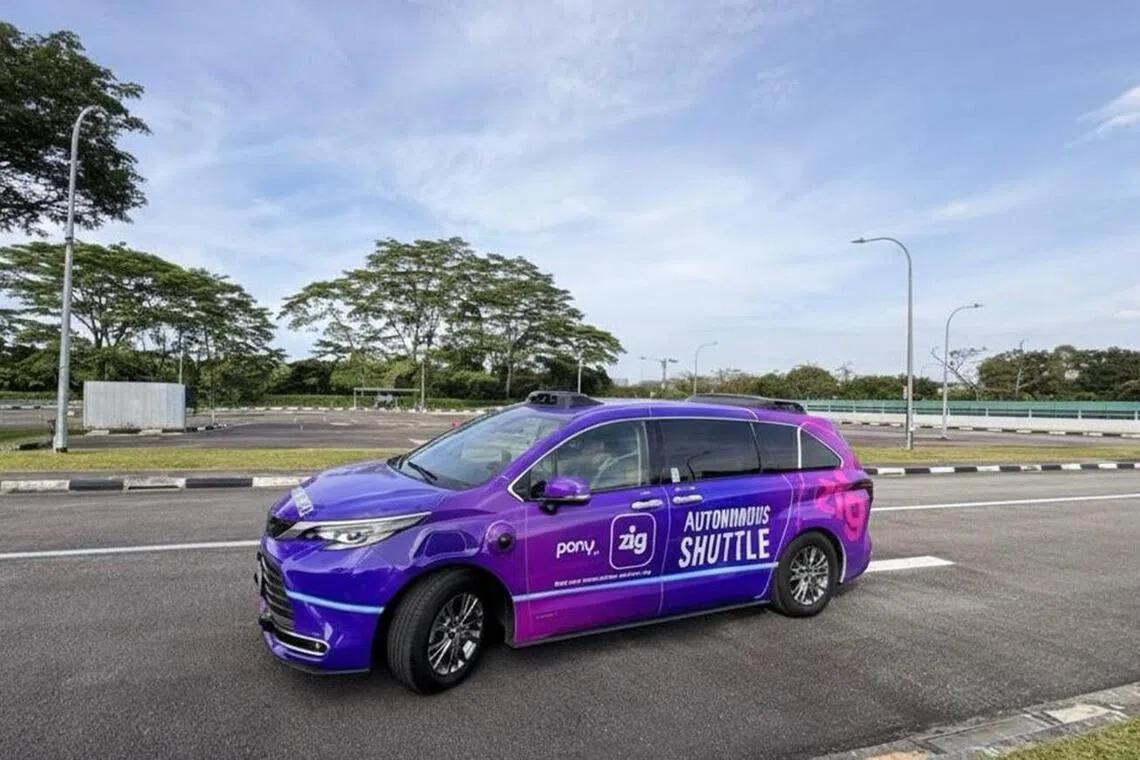
ComfortDelGro, whose autonomous vehicles (AVs) are made by Chinese autonomous driving firm Pony.ai, operates one of three AV routes in Punggol. (PHOTO: COMFORTDELGRO)
Source: The Straits Times
Driverless shuttle trials by ComfortDelGro (CDG) and Grab in Punggol are gathering pace ahead of the launch of commercial autonomous vehicle (AV) services there.
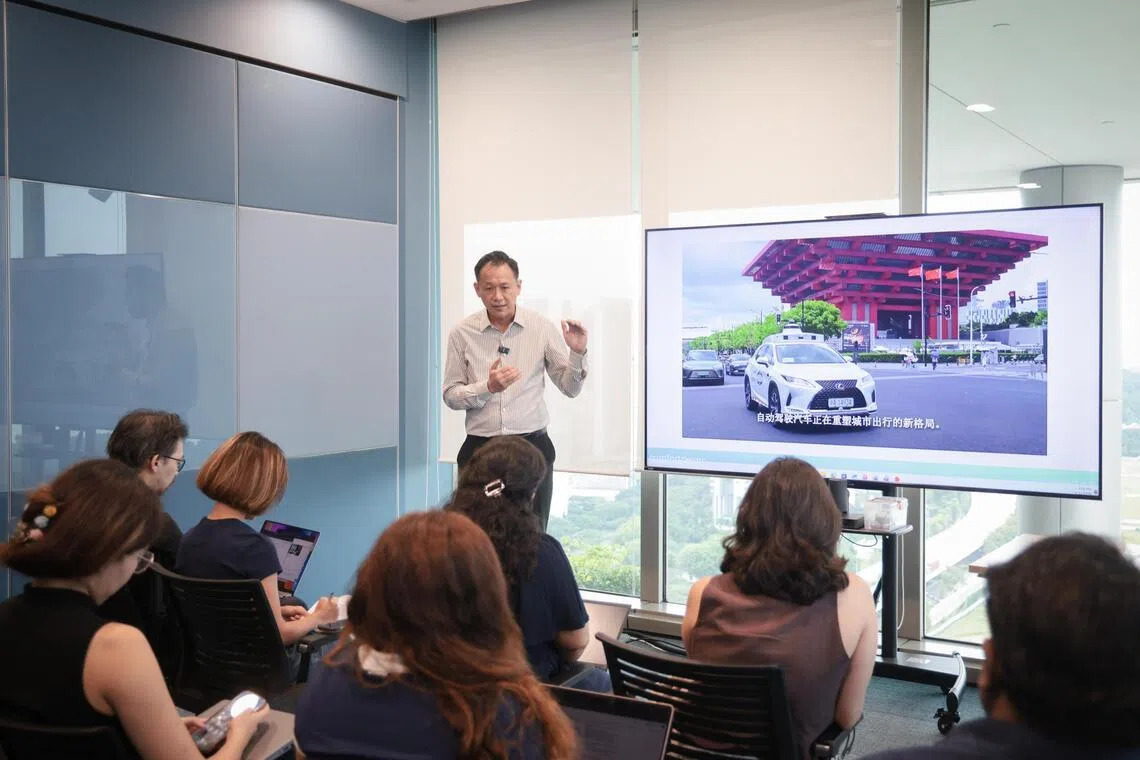
CDG has served more than 1,500 riders since its invite-only trial began on April 7, said Michael Huang, head of Singapore point-to-point mobility business, during a briefing on the company’s AV strategy on June 12.
Some Punggol residents and grassroots leaders have been invited to try the autonomous shuttle service before bookings open to the public. Huang did not say when public bookings would begin, but CDG is working closely with the Land Transport Authority (LTA) on this.
Grab, meanwhile, has served more than 5,000 passengers and logged over 60,000km of autonomous driving mileage so far, a spokesperson said on June 12.
Its invite-only rides started in January, while members of the public have been able to use the shuttle services since April 1.
Grab did not disclose when paid services would begin. It was previously reported that paid operations were expected to start in mid-2026.
Grab has said it will charge a flat fare of $4 per passenger when revenue services begin. As for CDG, Huang said the company has not set a price.
CDG, whose AVs are made by Chinese autonomous driving firm Pony.ai, operates one of three AV routes in Punggol.
The five-seater shuttles run in north-eastern Punggol on a 12km route with seven stops, including Punggol Plaza, One Punggol, Punggol Coast Bus Interchange and Oasis Terraces.
Grab operates the other two routes through a partnership with Chinese AV company WeRide. The routes connect residents to amenities such as Punggol Coast MRT station, Punggol Coast Bus Interchange, malls and the polyclinic.
Safety operators are seated behind the wheel and can take control of the vehicles if necessary.
CDG currently has nine safety operators, and manual interventions have been declining as the AV system adapts to local driving conditions, Huang said. These include Singapore’s tropical weather conditions and traffic patterns.
After trialling the technology here, Huang said he has observed that “the technology is very mature and is ready to take on a bigger role”, such as operating for longer hours. He added that CDG would be comfortable expanding operating hours in future.
Development of CDG’s service was briefly disrupted after an AV collided with a road divider on Jan 17, prompting a two-week safety time-out.
Investigations by LTA found that the safety operator had caused the vehicle to collide, after it had responded to what it thought was an object on the road. No passengers were on board.
On the biggest obstacles to wider AV adoption in Singapore, Huang cited public acceptance and economics.
“The number one is social acceptance,” he said, referring to road users and the general public. He added that while AV costs have fallen significantly over the past decade, they have yet to reach a level that makes large-scale deployment commercially viable.
Globally, CDG plans to convert 10 per cent of its point-to-point fleet of about 30,000 vehicles, or roughly 3,000 vehicles, to AVs by 2030.
Huang said China is likely to lead the company’s AV growth because the operating environment there allows faster commercialisation.
CDG has had five robotaxis in commercial operation in Guangzhou city since March 2025. The company is exploring AV opportunities in other cities such as Shenzhen, Beijing and London, as well as in Australia.