
Green jet fuel levy postponed due to impact of Middle East war: CAAS
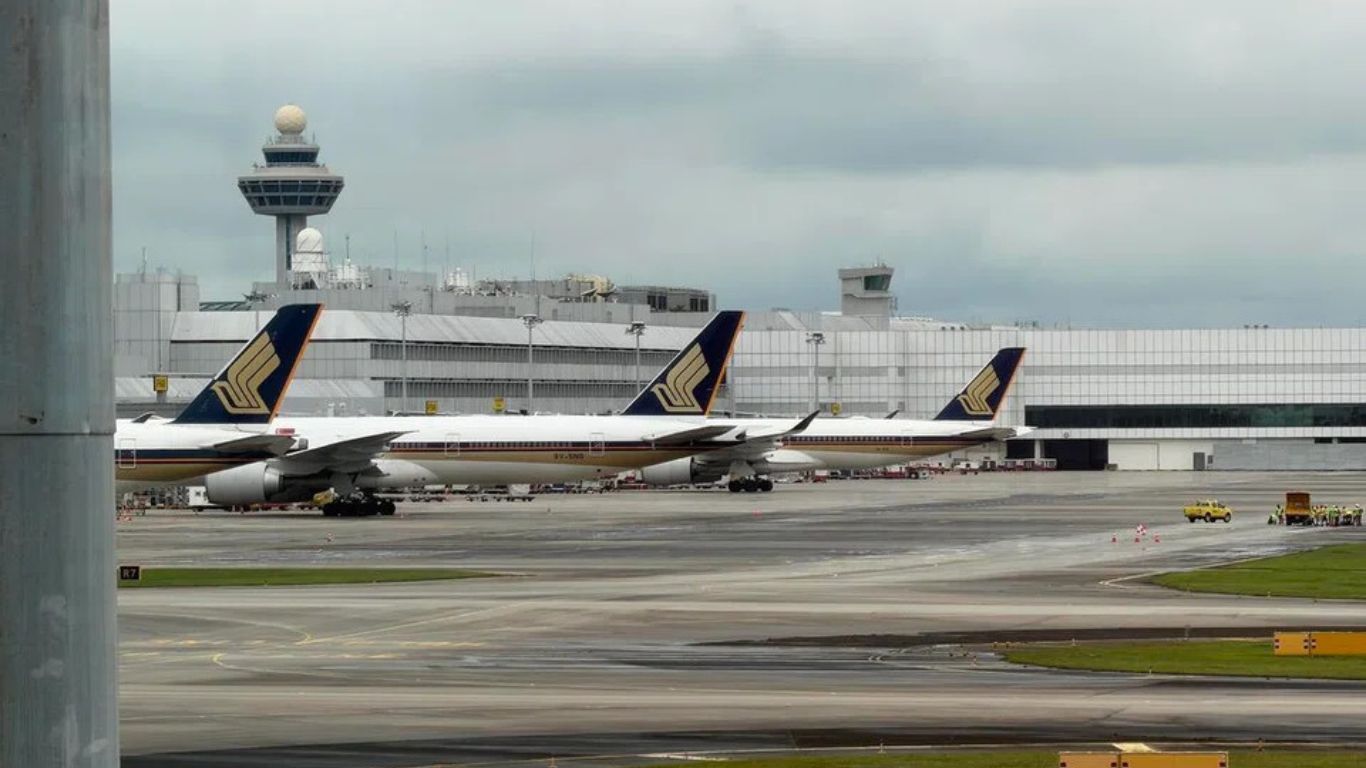
(ST Photo: Benjamin Seetor)
Source: The Straits Times
The green jet fuel levy on flights departing from Singapore will be postponed because of the impact of the Middle East war, said the Civil Aviation Authority of Singapore (CAAS) on March 25.
It will now apply to passengers departing Singapore from Jan 1, 2027, holding flight tickets sold from Oct 1, 2026.
It was originally meant to apply to passengers leaving Singapore from October, holding tickets sold from April 1.
Passengers flying out of Singapore from Jan 1, 2027, will pay a levy of between $1 and $41.60 that will go towards the purchase of sustainable aviation fuel, made mostly from waste materials such as used cooking oil.
CAAS said the decision was made in view of the impact of the ongoing conflict in the Middle East on airlines and passengers.
Some airlines such as Hong Kong carrier Cathay Pacific and Thai Airways International have already raised fuel surcharges or increased ticket prices.
Mr Han Kok Juan, director-general of CAAS, noted that Singapore remains firmly committed to aviation decarbonisation.
“We are taking a pragmatic pause in view of the current situation,” he added.
The previous target set by the authorities was for sustainable aviation fuel to form 1 per cent of all jet fuel used at Changi and Seletar airports in 2026, and to reach 3 per cent to 5 per cent by 2030.
Responding to The Straits Times’ queries on whether these targets will be affected in view of the levy’s postponement, CAAS said its 1 per cent SAF target will now apply from 2027 instead.
It added that its intention is still to raise the target to 3 per cent to 5 per cent by 2030, subject to global developments and the wider availability and adoption of green jet fuel.
Passengers in economy or premium economy class will pay a levy of between $1 and $10.40, depending on their destination.
Those who fly business or first class will pay between $4 and $41.60.
This is based on industry norms for calculating the carbon emissions of passengers in different cabin classes.
Travellers who fly farther will pay more as longer flights consume more fuel.
To apply the levy, destinations worldwide have been grouped into four geographical bands, with the levy amount increasing with each successive band, based on the distance travelled.
The bands are South-east Asia (Band 1); North-east Asia, South Asia, Australia and Papua New Guinea (Band 2); Africa, Central and West Asia, Europe, Middle East, Pacific Islands and New Zealand (Band 3); and the Americas (Band 4).
A passenger in economy or premium economy will pay a levy of $1 for a flight to Bangkok (Band 1), $2.80 to Tokyo (Band 2), $6.40 to London (Band 3), and $10.40 to New York (Band 4).
Those who fly business or first class will incur a levy of $4 to travel to Bangkok, $11.20 to Tokyo, $25.60 to London, and $41.60 – the maximum amount – to New York.
For flights with multiple stops, the levy will be based on the immediate destination after departing Singapore.
The postponement of the levy will also apply to cargo shipments, and general and business aviation flights – such as private jets and chartered services – departing Singapore from Jan 1, 2027.
The fee will not apply to passengers transiting through Singapore, and will not be imposed on training flights, as well as flights for charitable or humanitarian purposes.