
Irena launches programmes to scale clean energy in Asean; has plans for investor forum in S’pore
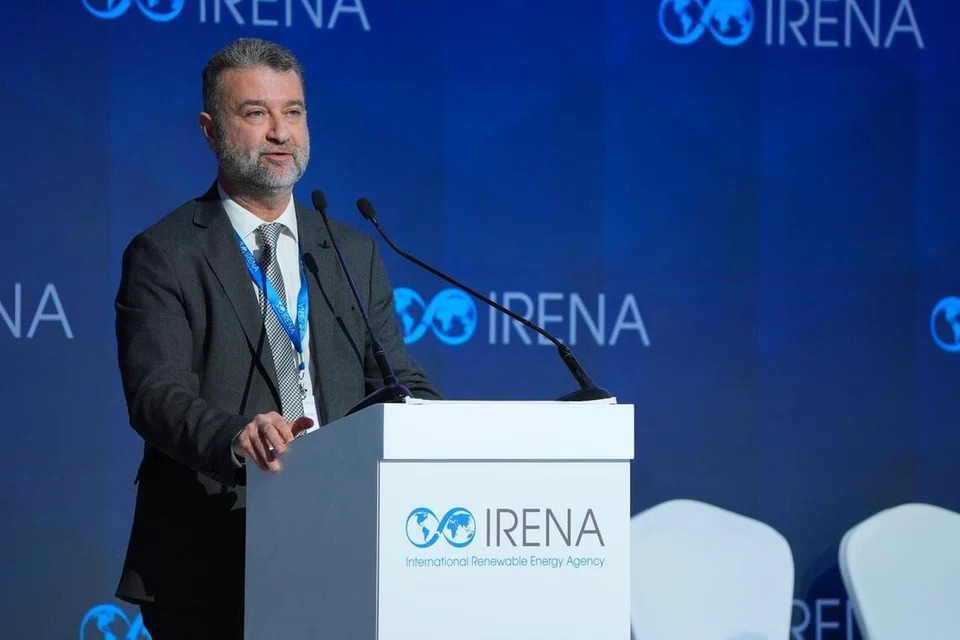
(Photo credit: IRENA)
Source: The Straits Times
A new partnership launched in Singapore last October to scale up clean energy across ASEAN is making headway, with programmes to support renewable energy and energy efficiency rolled out in Malaysia and Indonesia in February.
The Middle East-based International Renewable Energy Agency (Irena), an intergovernmental organisation, also has plans to convene an investor forum in Singapore in late-2026 or early 2027 to matchmake suitable projects with interested investors.
These initiatives aim to show how ASEAN economies can industrialise and grow economically, but in a less pollutive way.
Mr Gurbuz Gonul, the director of country engagement and partnerships at Irena, told The Straits Times that efforts to achieve this could include integrating renewable energy in industrial parks, electrifying selected industrial processes and strengthening local supply chains for renewable components.
The specific scope will be identified through national consultations, focusing on analyses that inform policy, and technologies that can be used to green local value chains and industries, he added.
According to a 2024 report by energy think-tank Ember, electricity demand in ASEAN is set to increase up to 41 per cent by 2030 from 2023 levels, driven by industrialisation, electrification and digitalisation.
It also noted that the region’s share of greenhouse gas emissions is expected to increase substantially due to population growth, expansion of manufacturing and increasing electricity demand from the region’s data centres.
“The emphasis is on linking renewable energy deployment to green growth, local value creation and employment opportunities,” said Mr Gurbuz.
He was giving ST an update on the Accelerated Partnership for Renewable Energy in South-east Asia, or Apresa, which was launched by Irena during the Singapore International Energy Week in October 2025.
The main aim of the partnership is to scale up clean energy in ASEAN. This will be done by strengthening renewable energy infrastructure, enhancing green economies, mobilising private sector investments and setting up renewable energy projects on remote islands in South-east Asia.
“Renewable energy is not just an energy transformation question anymore. It is an economic transformation because countries are seeing the benefit of using renewable energy to create value economic activities,” said Mr Gurbuz.
“The competitiveness of your economic activities is very much reliant on how you access the energy in a reliable way at cheap, competitive prices,” he added.
In Indonesia, Mr Gurbuz said Irena is also providing training to local communities to manage renewable energy plants. For example, it is preparing a capacity building programme in West Nusa Tenggara to help train locals on operating solar and micro-hydro mini-grids.
ASEAN is pushing for more renewable energy use, with a plan to reach 45 per cent of renewable energy in installed power capacity by 2030. A 2025 report by research firm Enerdata noted renewables account for about 33 per cent of the region’s installed power capacity.
Mr Gurbuz noted that Irena is also working on how remote islands in Indonesia and Malaysia can benefit from more renewable energy.
Currently, many of these communities rely on diesel, a fossil fuel, for power.
Mr Gurbuz said data is being collected from these communities on their energy needs at the household level, and also how much energy their public and economic infrastructure, such as schools and clinics, would require.
This information will help Irena work to close the energy-access gap, improve electricity reliability, replace diesel and promote productive energy uses, Mr Gurbuz said. The initiative aims to phase out diesel generators on remote islands and replace them with greener solutions such as solar and small-scale hydropower plants and battery storage.
This will not only help to stabilise energy costs and improve electricity supply but also support productive use of energy and expand local livelihoods, he added.
Mr Gurbuz said scaling up renewable energy in the region also requires financing.
To this end, Irena is gearing up to launch an investor forum in late-2026 or early 2027 to matchmake suitable projects with interested investors, he said, adding that the agency aims to organise the event in Singapore.
“As Asia’s leading sustainable finance centre... and as the regional leader for promoting and importing clean electricity, Singapore serves as the central location for bridging global capital with the regulatory expertise and international partnerships needed to unlock the capital required for energy transition,” he noted.
Irena will assess whether the projects are bankable to attract financiers or help developers improve their projects before recommending them. The agency will also propose to financiers – such as multilateral development banks – to fund them.
Examples of such projects include solar panel and onshore wind projects that have secured land, permits and feasibility assessments as well as transmission and grid reinforcement projects that support a greater share of renewables and cross-border electricity trade.
One way the region hopes to increase deployment of renewable energy is through the ASEAN Power Grid.
This regional grid is envisioned as being key to facilitating cross-border electricity trade among countries in South-east Asia, as renewable resources in the region are unevenly distributed.
However, infrastructure still remains a major obstacle to ramping up renewable energy in ASEAN, said Mr Gurbuz.
Singapore is a major champion of the ASEAN Power Grid, and has a target of importing 6 gigawatts (GW) of low-carbon electricity from its neighbours by 2035.
Mr Gurbuz said the city-state played a key role in driving momentum in the ASEAN Power Grid with its demand for clean energy imports, and its support for building interconnections between the countries.
Grid infrastructure refers to the interconnected network needed to bring power from producers to users. Such a network is critical in ensuring electricity can be distributed from the generation source, such as a renewable energy project, to where users are.
“Renewable energy can be deployed quickly, but grid development and infrastructure development cannot follow suit at that pace,” he said. “That is why there is a greater emphasis now on how infrastructure can unlock investments into renewable energy.”
Moreover, for the regional grid to be realised, national-level infrastructure must first be improved, said Mr Gurbuz.
Apresa will also aim to enhance countries’ grids to be more resilient and flexible, which is important to integrate more renewable energy that can be tapped for cross-border trading and contribute towards the ASEAN Power Grid.
This flexibility is needed because of the intermittent nature of renewables – such as when the sun does not shine or when the wind does not blow – as compared with the constant power generation from fossil fuels.