
Singapore keeps 2026 economic growth forecast at 2-4%, citing higher downside risks from Iran war
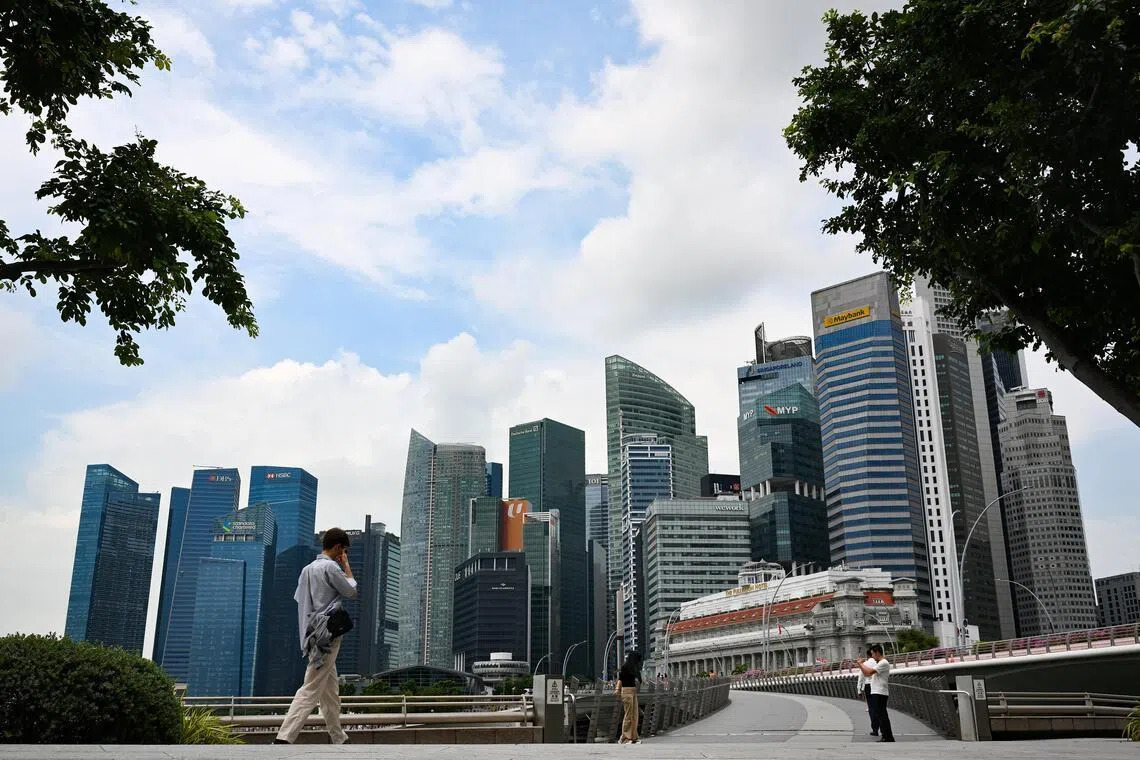
MTI, in its economic survey report for the first quarter, said growth was driven by strong performance of the wholesale trade, manufacturing, and finance and insurance sectors. (PHOTO: ST FILE)
Source: The Straits Times
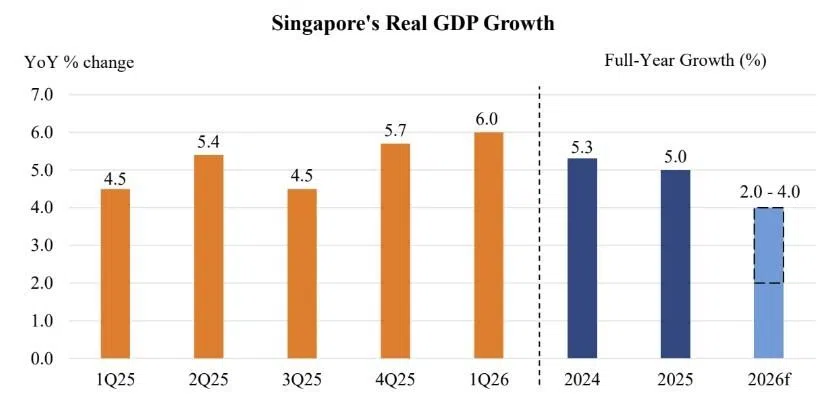
Singapore maintained its projection for economic growth in 2026 within the 2 per cent to 4 per cent range despite a strong performance in the first quarter of the year, with the Ministry of Trade and Industry (MTI) saying downside risks “have risen significantly”.
MTI on May 25 said the outlook for the Singapore economy in 2026 has weakened since February when the Iran war began, though the economy performed better than expected in the first quarter. It grew 6 per cent year on year, extending the 5.7 per cent expansion in the previous quarter. This is higher than MTI’s earlier estimate of 4.6 per cent growth announced in April and the fastest pace since the third quarter of 2024.
Many analysts had expected Singapore to lower its growth forecast for 2026. Slower growth would have meant dampening the outlook for jobs and wage increases as businesses cut back on expenses to manage the higher costs of energy and raw materials.
Growth this year will still be lower than the 5 per cent pace achieved in 2025.
MTI, in its economic survey report for the first quarter, said growth was driven by strong performance of the wholesale trade, manufacturing, and finance and insurance sectors.
In particular, robust AI-related demand led to growth in the machinery, equipment and supplies segment of the wholesale trade sector, as well as the electronics and precision engineering clusters within the manufacturing sector.
On a quarter-on-quarter seasonally adjusted basis, the economy expanded by 1 per cent in the first three months of 2026, easing from the 1.3 per cent growth in the preceding quarter, though better than the 0.3 per cent contraction announced in April.
Encouraged by the strong first-quarter performance, Maybank raised its growth forecast to 4.2 per cent in 2026, from an earlier 3.4 per cent.
Dr Chua Hak Bin, regional co-head of macro research at Maybank, said: “The economy is looking resilient and supported by strong tailwinds from AI capital spending, a construction boom and safe haven flows.”
The Middle East war is severely impacting some energy-dependent industries, particularly petrochemicals, but other related sectors are being cushioned by the diversion of demand from the region – including marine shipping and aviation, he added.
UOB also upgraded its 2026 growth forecast, raising it to 3.2 per cent from 2.5 per cent.
UOB associate economist Jester Koh said AI-related tailwinds could continue to support growth in the second half of 2026, likely fully offsetting the associated drag from energy and petrochemical input supply disruptions stemming from the Middle East conflict.
However, the outbreak of war in the Middle East has led to higher prices of, and shortages in, crude oil and petroleum products, such as petrol and diesel refined from these, contributing to contractions in the fuels and chemicals segment of the wholesale trade sector and the chemicals cluster of the manufacturing sector.
Since the outbreak of war, oil prices have surged and supply chains are in disarray with the closure of the Strait of Hormuz – through which 20 per cent of the world’s oil consumption used to pass – dampening the outlook for trade-dependent economies across Asia, including Singapore.
MTI said the conflict has also affected the global economic outlook, with disruptions to the supply of energy and other key inputs, such as fertiliser and aluminium, amid the blockade of the strait.
This has driven up inflationary pressures, which are “expected to erode real incomes and dampen consumption, as well as cause a tightening in global financial conditions”, said MTI.
“Prolonged supply disruptions from the Middle East conflict could keep energy and other input prices elevated and sharply slow global growth. Other risks include a renewed escalation in US tariff actions and a sudden pullback in global AI-related capital spending,” said Dr Beh Swan Gin, MTI’s permanent secretary, in a media briefing.
In response to a question on how fast a resolution of the Iran conflict can improve the outlook, Dr Beh said that while such a development would have a positive impact on market sentiment, it will take time for both crude and natural gas facilities in the Middle East to come back on-stream.
“We expect that there will continue to be a supply crunch for the foreseeable future, which will result in inflationary pressures... this will continue for a few months even after an agreement is reached,” he said.
Global merchandise trade volume growth is projected to slow to 1.9 per cent in 2026 from 4.6 per cent in 2025, said the World Trade Organization in March. In April, the International Monetary Fund lowered its forecast for 2026 global economic growth to 3.1 per cent, from an earlier estimate of 3.3 per cent.
Still, MTI said, demand related to artificial intelligence has remained robust and should continue to support the growth of regional economies throughout the year. The outlook for US tariffs is also broadly unchanged.
“Sustained global AI-related capital spending should continue to be a key driver of growth for the electronics and precision engineering clusters within the manufacturing sector. In particular, demand for AI-related semiconductors such as networking and memory chips from the data centre end-market is expected to remain robust for the rest of 2026.”
DBS Bank senior economist Chua Han Teng said Singapore’s resilience was also supported by safe haven inflows, reflected in higher bank deposit growth by non-residents and their increased contribution to overall deposit growth in March, the first month since the onset of the Iran war.
“Flight to safety and wealth flows could sustain as Singapore continues to stand out as a beacon of stability as well as a trusted hub amid global uncertainties,” he said.
However, he added that economic prospects in the coming quarters continue to be held hostage by the risk of disruptions in the Strait of Hormuz and inconclusive US-Iran peace talks.
Among the domestically orientated sectors, construction should continue to be supported by public sector projects, while the real estate sector will see support from new private residential property launches and resilient owner-occupier demand, said MTI.
Nonetheless, downside risks to Singapore’s economic outlook have risen significantly. MTI said it will continue to monitor developments closely and adjust the gross domestic product growth forecast over the course of the year if necessary.
Dr Beh said: “Weaker consumer sentiment following the Middle East conflict may weigh on retail trade and food and beverage services.”
However, he said, government support measures, including the disbursement of CDC vouchers in June 2026, should help cushion the impact.
On tariffs that were ruled by the US Supreme Court as unlawful, Dr Beh said they will be replaced by new ones under Section 301, effectively bringing back tariff rates to previous levels.
“I don’t anticipate any positive surprises,” he said.
On jobs, MTI chief economist Yong Yik Wei said that while unemployment has ticked up in the first quarter, the labour market remains “fairly resilient”.