
Singapore’s energy is secure despite disruptions from Middle East conflict: Tan See Leng
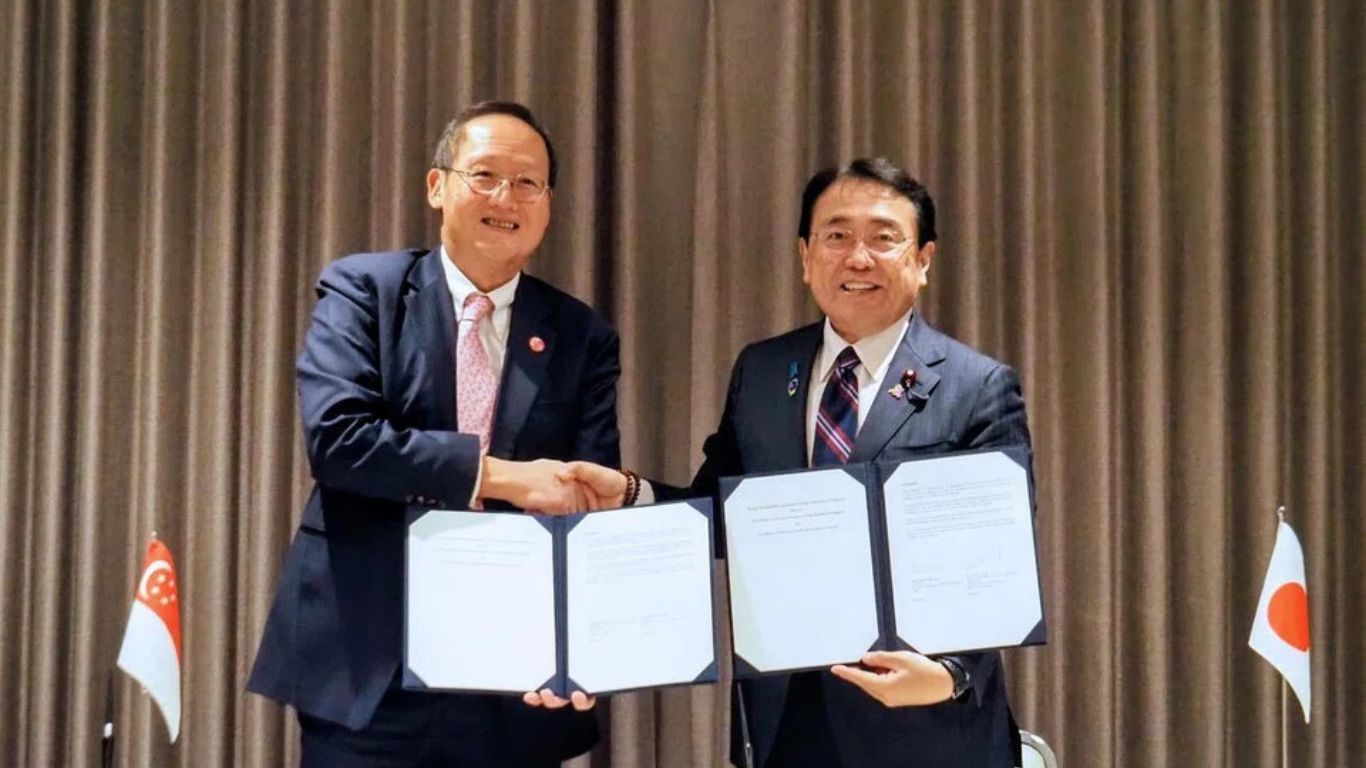
(Photo credit: Ministry of Economy, Trade and Industry, Japan)
Source: The Straits Times
Singapore’s energy supplies remain secure despite rising oil and gas prices caused by conflict in the Middle East, said Manpower Minister Tan See Leng.
In a video posted on his social media pages on March 15, he noted that natural gas – all of which is imported – fuels 95 per cent of Singapore’s electricity generation.
But about half of this is piped to Singapore and will not be affected, said Dr Tan, who is also Minister-in-charge of Energy and Science & Technology.
This is one of Singapore’s “four lines of defence” to safeguard its energy supplies, he added.
“I want to assure all of our fellow Singaporeans that our energy is secure, even in the face of these disruptions,” he said.
To safeguard energy security, Singapore also imports gas from sources beyond the Middle East, such as Australia and the US.
In addition, it maintains fuel stockpiles, and all its power plants can switch from using natural gas to diesel when needed.
Still, Dr Tan reiterated that global energy prices are rising, and Singapore’s electricity prices will also likely increase in the months ahead.
He urged Singaporeans to help offset the increase by conserving energy and using more energy-efficient appliances.
Dr Tan made these remarks in Tokyo, where he attended a high-level forum on energy security.
Singapore and Japan inked an agreement on March 15 to strengthen cooperation on energy, sustainability and climate change.
Both countries will collaborate more deeply on cross-border electricity imports and low-carbon hydrogen and ammonia. They will also work together on areas such as carbon capture, utilisation and storage, as well as civil nuclear energy, liquefied natural gas and advanced grid system enablers.
The collaboration may include policy exchanges, facilitation of business and financial cooperation, and efforts to harmonise standards and regulations, said the Ministry of Trade and Industry in a statement.
Singapore and Japan will also encourage industry players and financial institutions to work together and invest in low-carbon energy projects.
The agreement was signed by Dr Tan and Japan’s Minister of Economy, Trade and Industry, Mr Ryosei Akazawa.
The two countries have previously collaborated on energy projects. For instance, Singaporean engineering firm Seatrium won a multi-million contract from Japanese firm Penta-Ocean Construction in 2025 to build a heavy-lift vessel for offshore wind installations.
Speaking at the forum, Dr Tan said global demand for energy will keep going up even as conflict in the Middle East pushes up prices and disrupts markets.
This is why energy security – including for Singapore – is critical, he added.
Dr Tan noted that the ongoing conflict has affected energy prices and global trade and investment flows, with Asia particularly exposed as many countries in the region import most of their energy.
“Yet, we expect the energy demand to continue to keep growing as our economies become more reliant on electricity to drive growth in advanced manufacturing, AI and electric vehicle adoption,” he said.
The need for reliable and secure energy supplies will be critical, he added, stressing the need for countries to work together to build a more resilient energy future.
Noting that Singapore is a “geographically disadvantaged... very small country”, he said: “We diversify our energy portfolio and we pursue all feasible options to strengthen our energy reliability, security and our own resilience.”
The Indo-Pacific Energy Security Ministerial and Business Forum was co-hosted by the US and Japan. Organised in 2026 for the first time, it convenes ministers and business leaders to discuss energy security in the Indo-Pacific.
Speaking on Singapore’s approach to diversify its energy portfolio, Dr Tan said natural gas will continue to underpin the security of its system “for the foreseeable future”.
The Republic is investing heavily in its gas supply chain and is building a second liquefied natural gas terminal to expand capacity. It has also set up GasCo – a fully government-owned entity – to centralise gas procurement from diverse sources.
At the same time, Singapore – one of the most solar-dense countries in the world – is stepping up efforts to tap domestic solar energy. The country reached its target of installing two gigawatt-peak of solar capacity five years ahead of its 2030 deadline and is now aiming to raise this to three gigawatt-peak by 2030.
However, as Singapore is small and densely built-up, solar energy can supply at best about 10 per cent of Singapore’s electricity demand, Dr Tan said.
He added that this is why Singapore is seriously studying advanced nuclear energy technologies such as small modular reactors, which could offer a safe, reliable and cost-competitive source of power for the land-scarce island.
Singapore is partnering international leaders in nuclear energy – such as the US and South Korea – to build its capabilities in this area, especially in nuclear safety and technology assessment.
Within the region, Dr Tan said Singapore is also working with its neighbours on the ASEAN Power Grid, which aims to enable cross-border electricity trading in South-east Asia.
Once realised, the power grid will significantly strengthen the region’s energy resilience and allow countries to diversify supply sources and respond more effectively and nimbly to system disruptions, he said.